
Why Busy Teams Fail and Productive Teams Scale
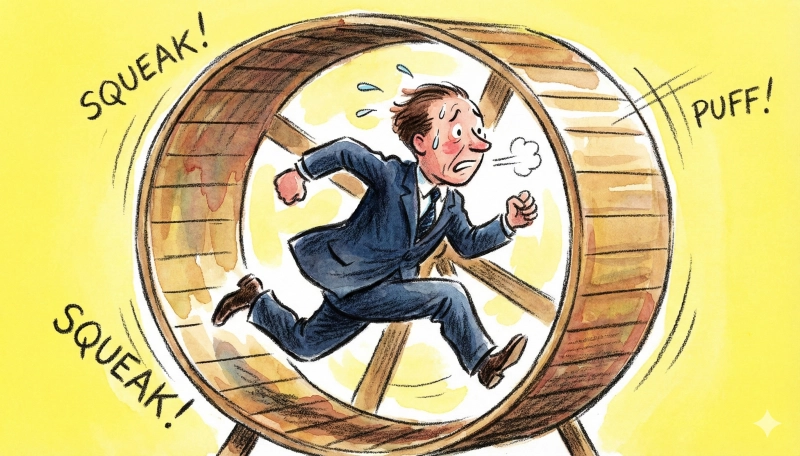
The Problem With Being Busy
You've been there, right?
Everyone's calendars are packed. Slack is buzzing. Your team keeps saying they're "swamped" and "behind." Yet somehow, the important stuff still isn't getting done.
I was on a call yesterday where the prospect opened with "Sorry, running behind. My call went long too." Then we spent the first few minutes talking about bathroom art and weekend plans.
Here's what I noticed: This person wasn't actually behind on anything critical. They were just... busy.
There's a difference. And most agencies never figure it out.
Busy vs Productive
Busy means your calendar is full. Productive means your deliverables are done.
Busy is back to back meetings about the project. Productive is shipping the project.
Busy is everyone "working hard." Productive is clients getting results.
I've seen agencies where the team works 60 hour weeks but can't hit a deadline to save their lives. They're not lazy—they're trapped in a system that rewards motion over results.
The founder looks at all that activity and thinks, "We just need more people." Wrong. You need fewer meetings and clearer priorities.
The Real Problem No Production Line
Here's the thing most agency owners miss: Your team isn't slow because they're incompetent. They're slow because you're running on hero mode instead of systems.
Every project gets reinvented from scratch. Every handoff is a guessing game. Every "quick sync" turns into a 90 minute strategy session because nobody wrote anything down.
That's not a people problem. That's an architecture problem.
When I walk into an agency, I can spot the chaos immediately. The project manager is in five different Slack channels trying to figure out what the client actually approved. The designer is building something based on a verbal brief from three weeks ago. The developer is waiting for assets that were supposedly "almost done" last Tuesday.
Meanwhile, everyone's calendars are booked solid with alignment meetings.
The Meeting Trap
You know what's funny? The busiest agencies have the most meetings. And the most meetings create the least clarity.
If your handoffs were clean, you wouldn't need a daily standup to figure out where everything stands.
If your briefs were complete, you wouldn't need three quick syncs to align on scope.
Most meetings exist to patch holes in your system. The meeting isn't the solution — it's evidence of the problem.
I worked with one agency where the creative director was spending 20 hours a week in project alignment calls. Twenty hours. That's half their week just talking about work instead of doing it.
We eliminated most of those meetings by building proper handoff gates. Now the work moves through the system without constant supervision. The creative director actually creates again.
Learn more about the Handoff Gate
What Changes When You Build the Machine
Here's what happens when you stop running on hero mode and start running on systems:
Your project manager stops playing detective. They know exactly where every project stands because the dashboard tells the truth.
Your team stops asking “What am I supposed to work on?” because the priority queue is clear and maintained.
Your clients stop asking “Where are we on this?” because they receive automatic updates when milestones hit.
Your calendar empties out because the machine runs itself.
Suddenly, busy becomes productive. Your team works normal hours but ships twice as much because they're following a recipe instead of reinventing dinner every night.
Start Here The One Week Test
Next week, track this: How much time does your team spend in meetings versus actually producing deliverables?
I'm willing to bet it's 60/40. Maybe worse.
That ratio should be flipped. If your team is spending more time talking about work than doing work, you don't have a capacity problem—you have a system problem.
The fix isn't hiring more people. It's building the machine that lets the people you have actually produce.
Because here's the truth: A busy team that can't deliver is just an expensive way to disappoint clients. A productive team that ships on time is how you build something that scales.