
The 1-10-100 Rule: Why Marketing Agency Margins Don't Grow With Revenue
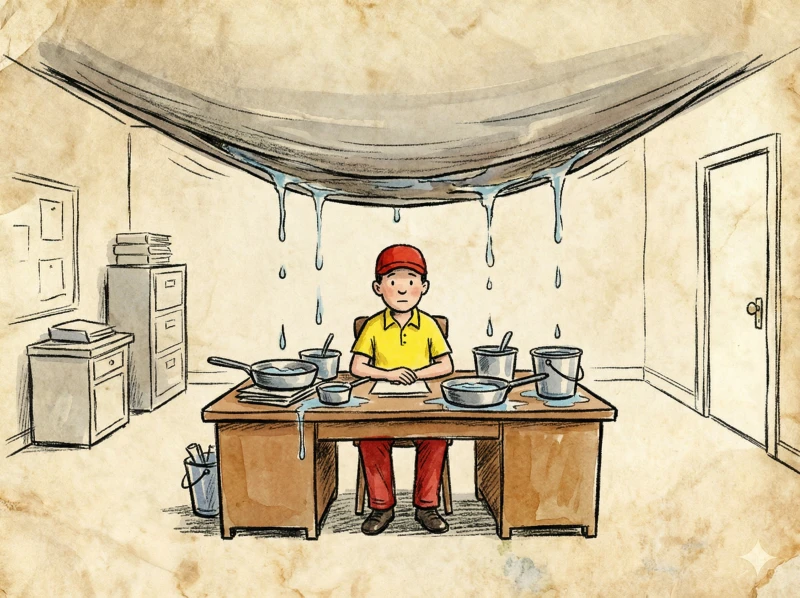
Revenue grows. Margins don't. Here's the structural reason why.
The 1-10-100 rule from manufacturing quality management explains one of the most consistent causes of margin compression in marketing agencies. Revenue grows, output grows, and margins stay flat or quietly shrink. More clients, more deliverables, roughly the same margin percentage, sometimes less. The team is working hard. Delivery is mostly going out on time. But the numbers don't reflect the effort.
The cause is usually where in the workflow quality problems get caught.
The 1-10-100 Rule
There's a principle from manufacturing quality management called the Cost of Poor Quality, or COPQ. It describes how the cost of fixing a defect multiplies depending on when in the process it's discovered. The relationship is roughly 1-10-100.
If a copywriter catches a missing call-to-action before passing the document to the designer, fixing it takes thirty seconds. Cost: negligible.
If the same issue goes unnoticed until the account manager's final review, fixing it means reopening the design file, adjusting the layout, re-exporting, and interrupting the copywriter to write the missing line. What would have taken thirty seconds now takes an hour of combined team time across two or three people.
If the asset reaches the client and they catch it, the cost isn't just the revision. It's the trust that gets spent on an emergency call, the relationship that requires repair, and the increased likelihood that the client starts looking for alternatives at renewal.
The same defect. Three different points of detection. Three very different costs.
Why Agency Rework Costs Rise With Revenue
The default quality management approach in most agencies is to catch issues at final review, right before delivery. A senior person, often the founder, looks at the work at the end of the process and sends things back when they're not right.
That approach works up to a point. The problem is that it's the most expensive point in the 1-10-100 scale to be catching things, and as volume grows, the cost of running quality that way compounds. More clients means more final reviews, more rework cycles, more of the senior person's time absorbed into catching problems that were introduced earlier in the process.
The margin doesn't grow because the rework cost grows with the revenue.
What Catching Problems Earlier Actually Requires
Moving detection earlier in the workflow isn't about adding more review steps or slowing things down. It's about building clear criteria into each step so the person doing the work knows what done looks like before they pass it forward.
When every step in the workflow has a defined output and a short checklist of what it needs to include before it moves to the next person, two things happen. First, the person completing the step catches their own issues before they compound. Second, the person receiving the work knows exactly what to expect, so handoff friction drops.
This is what a properly built Asana workflow does. Each step in the production sequence has acceptance criteria built in. Work can only move forward when the criteria are met. The question at each step isn't "is this done?" it's "does this meet the defined standard for this step?"
Tracking Quality Across the Workflow: First Time Acceptance
Once handoff criteria are in place, you can measure how often work actually passes through each step cleanly on the first attempt. That metric is called First Time Acceptance, or FTA.
If your design team sends back 35% of the briefs they receive from strategy because information is missing or unclear, your FTA at that handoff is 65%. That 35% represents rework that was preventable, work that has already been paid for once and is now being paid for again.
When FTA is tracked natively in Asana, you can see exactly which handoffs are generating the most rework. A task that gets kicked back triggers a rework tag. That feeds into a dashboard showing which steps in the process are the most expensive, which team members are generating the most rework downstream, and where a single process improvement would have the most impact on margin.
The goal isn't perfection. The goal is visibility, knowing where quality is leaking and fixing it upstream rather than absorbing it at delivery.
If you want to see what this looks like built into an actual Asana workflow, our Asana implementation service for marketing agencies includes FTA tracking and the quality gate architecture as a core part of the build.
Frequently Asked Questions
What is the 1-10-100 Rule in quality management?
The 1-10-100 Rule describes how the cost of fixing a defect multiplies depending on when it's caught. A defect caught at the step where it was introduced costs roughly one unit of effort to fix. The same defect caught at final internal review costs around ten units. Caught by the client after delivery, it costs one hundred, because of the rework, the relationship repair, and the churn risk that come with it. Applied to a marketing agency's delivery workflow, the defect is typically a missed brand guideline, an unclear brief, or a failed quality check at any step before delivery. The rule applies directly to how agency margins get compressed.
What is the Cost of Poor Quality (COPQ) for a marketing agency?
COPQ for a marketing agency includes all the time and resources spent producing work that doesn't meet the standard the first time. That includes revision cycles, rework after internal review, emergency revisions after client feedback, and the cost of the senior person's time spent reviewing and correcting work at the end of the process. Most agencies absorb these costs invisibly, showing up as margin compression rather than as a line item anyone tracks.
What is First Time Acceptance (FTA) and how do you measure it in Asana?
First Time Acceptance measures the percentage of work that moves through each handoff in the workflow without being sent back for revisions. To track it in Asana, you build acceptance criteria into each step and tag any task that gets kicked back as a rework. That tag feeds a dashboard showing FTA rates by step and by team member. The data tells you exactly which handoffs are generating the most rework and where a process change would have the most impact on margin.
How do you build quality checks into an Asana workflow?
The approach is to add a short set of acceptance criteria to each step in the workflow before anyone starts building. When the criteria are defined in advance, the person completing the step can check their own work before passing it forward. In Asana, this can be implemented as a checklist on the task itself, or as fields that must be completed before the task moves to the next stage. The result is that quality issues get caught at the step where they're introduced rather than downstream where they're more expensive to fix.