Your Agency's Profit Should Be
2x Higher.Here's What's Eating It.
The production system that took one agency from 135 to 667 monthly initiatives without adding headcount. For remote agencies with 6 to 50 employees.
Find Out What's Costing You → Take the Free Diagnostic
Founders know there's a lot of wasted time in the chaos of delivering for clients. But you may not realize that just getting 30-40% of it back would mean you could double the amount of money going into your bank account while making your life significantly less stressful.
Here are the hard numbers:
15 clients at $5.5k average
Revenue: $80k
Delivery costs: $15k
Costs: $50k
Profit: $15k
20 clients at $5.5k average
Revenue: $110k
Delivery costs: $20k
Costs: $50k
Profit: $40k 💰
Your profit more than doubles without hiring anyone. Fixed costs stay flat. All while doing more of what you enjoy and reducing stress for everyone, including your clients.
The production floor methodology that increased agency throughput 5x from someone who built profit systems for Sony's billion dollar turnaround.
The Invisibility Crisis
Most remote agency founders are flying blind. In a physical office you can see the work happening. You can feel the energy or the lack of it. In a remote agency you only see the smoke once the fire is already burning.
This is the invisibility crisis. When you can't walk the factory floor you lose the ability to spot problems before they cascade. You lose natural accountability. You lose the quick course corrections that happen in hallway conversations. You're relying on trust and hoping for the best but hope is not a management strategy. When problems finally surface it is usually too late. The client is already upset. The margin is already gone. Your team is exhausted from pulling an all nighter to save a project that shouldn't have been in trouble in the first place.
At Essence of Email, I Proved Production Thinking Works
When I joined, the agency was in chaos. Lots of clients churning, low output per client, margin disappearing into rework and firefighting. We churned unprofitable clients and rebuilt operations from the ground up.
Here's what changed when we started treating it like a factory:
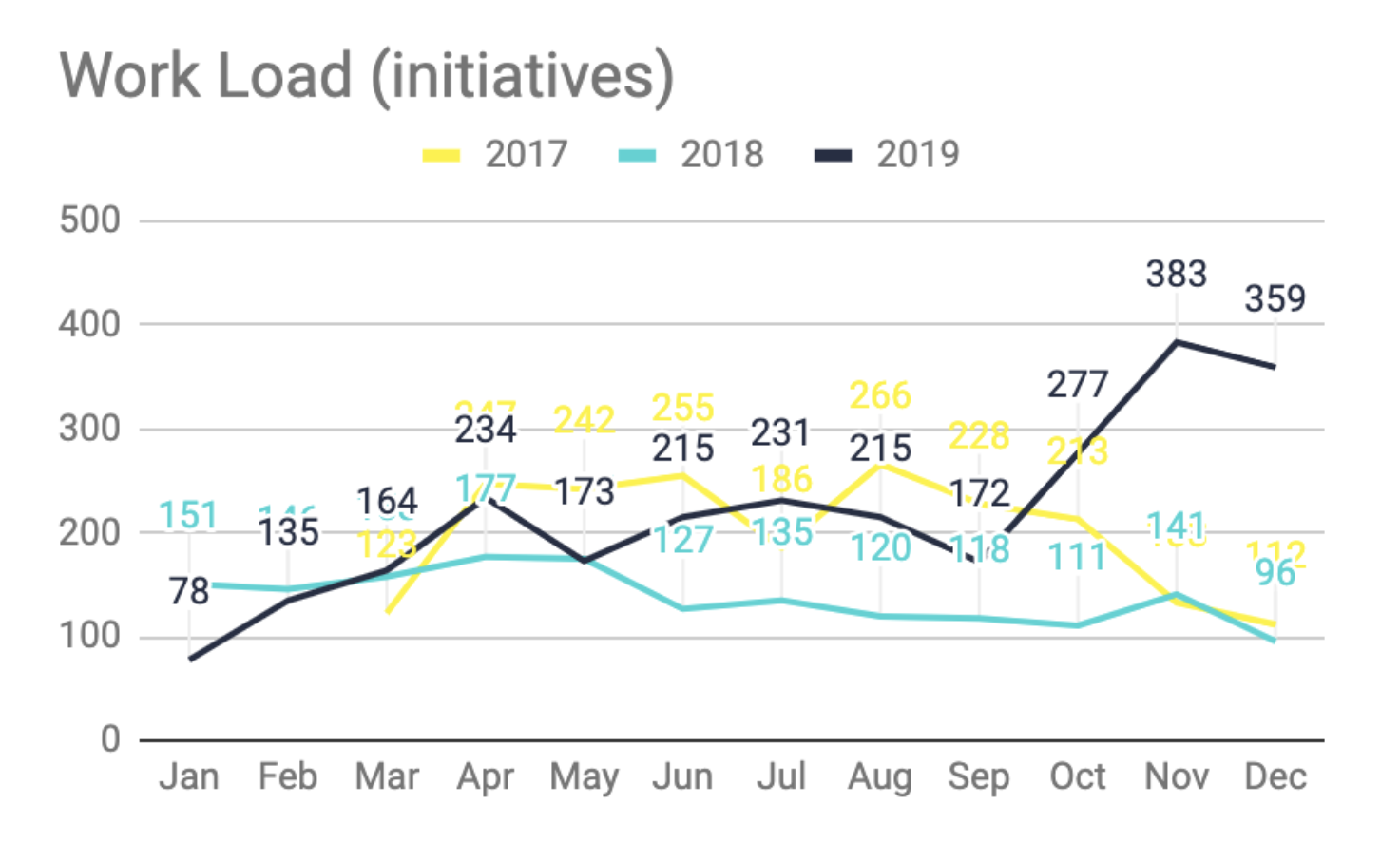
Within 5 months:
- Monthly output jumped from ~135 initiatives to ~383 initiatives
- 2.8x increasewithout adding headcount
After 1 year:
- Monthly output hit ~667 initiatives
- 5x the throughputfrom when I started
- Per-person client capacity increased 50% (from ~1.2 clients → ~1.8 clients per team member)
- Scaled initiatives per client 8x (from 3 → 26 initiatives per client)
- Fewer total clients, higher output per client - the efficiency gain agencies actually need
This wasn't from hiring more people or buying new software.
It was from:
- Mapping how work actually flows through the agency (the value chain)
- Treating roles as production stations with measurable throughput
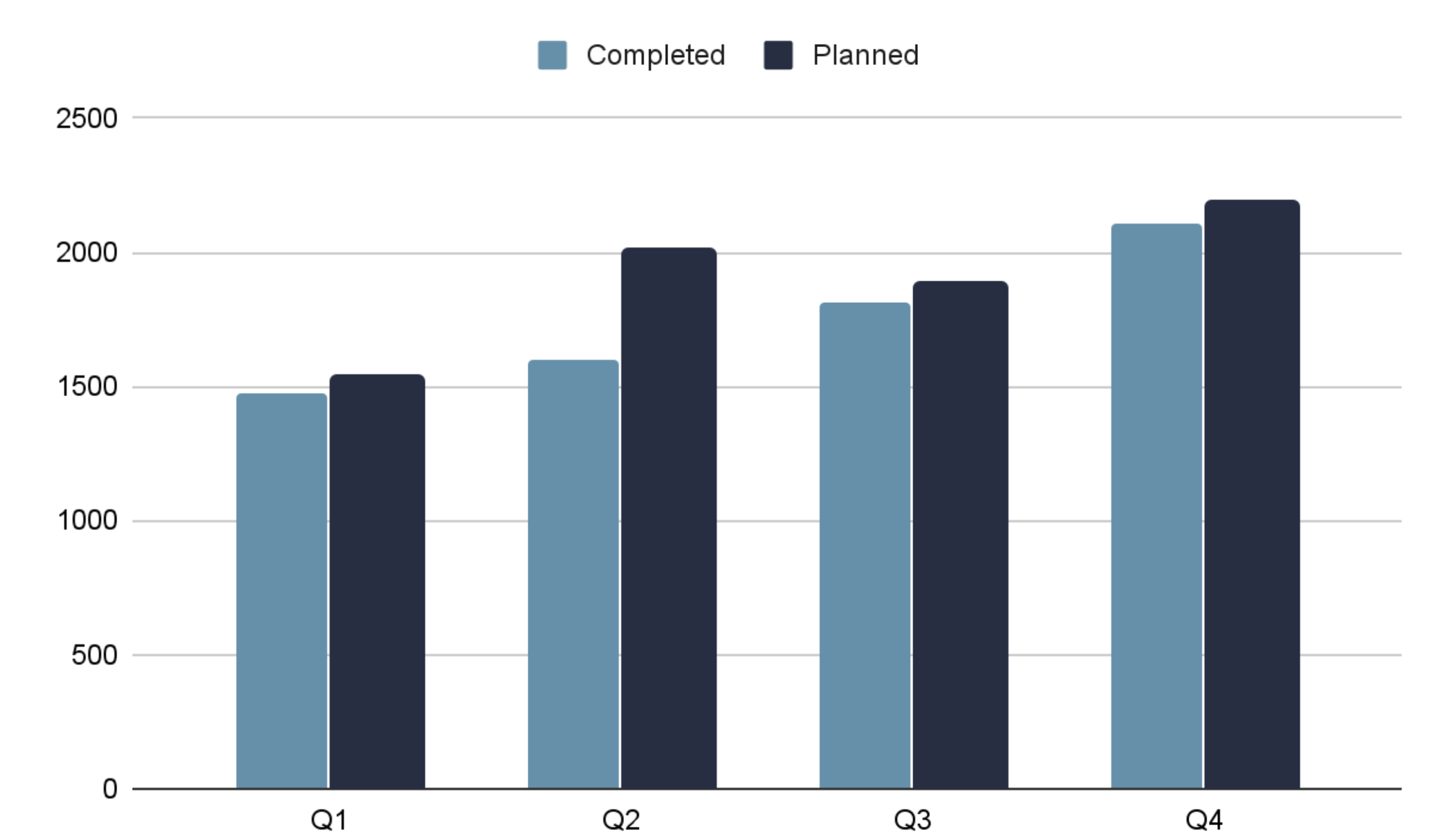
- Installing weekly production reviews where people analyze their own planned vs. actual performance
- Teaching people where they fit in the factory, not just "what tasks to do"
The same production discipline approach - measuring throughput, tracking profitability, creating visibility - applied to a remote email agency.
But This Approach Doesn't Work for Everyone
It ONLY works if you have:
- 6-50 employees (below 6, everyone does everything - too small for production systems; above 50, this is still how you should work, but it requires more ops leadership)
- Remote or hybrid team structure (co-located agencies have different visibility problems)
- Operational chaos you can feel. Founder bottleneck, handoff failures, costs scaling faster than revenue
- Recognition that more meetings or discussions won't fix the visibility problem
- Willingness to implement production discipline (not just hire someone and hope)
Critical warning: If you're thinking about hiring an ops person, you'll likely hire someone who locks today's poor structure into place. That just ensures you're systematically chaotic. You need to know what to fix before you hire someone permanent to operationalize it.
- You'll likely hire someone who turns bad structure into repeatable bad structure
- You'll likely hire someone who hardens today's mistakes into process
- You'll likely hire someone who locks today's bad structure in place
If you're a founder, under 6 people, or running a co-located agency, then you can leave this page.
Now, if you're running a 6-50 person remote agency and you know the way you are managing it isn't working... pay attention to every word on this page.
Raw Material is Time
Manufacturing companies enforce production discipline because raw materials carry massive cost and risk. If a factory manager let expensive steel sit on a shelf for three weeks they would be fired.
In an agency your raw material is your team's time. But most agencies treat that time like it is infinite. It isn't. It is the most expensive inventory you own and it is probably leaking everywhere. Every quick sync that lasts an hour is raw material on a shelf. Every broken handoff where a designer has to restart an assignment because the brief wasn't clear is inventory being thrown in the trash. When you stop looking at your agency as a collection of people and start looking at it as a production line everything changes. You stop managing people and start managing the flow of work.
Production Floor Thinking Solves the Remote Visibility Crisis Through Three Core Concepts
Concept 1: Your Agency IS a Factory
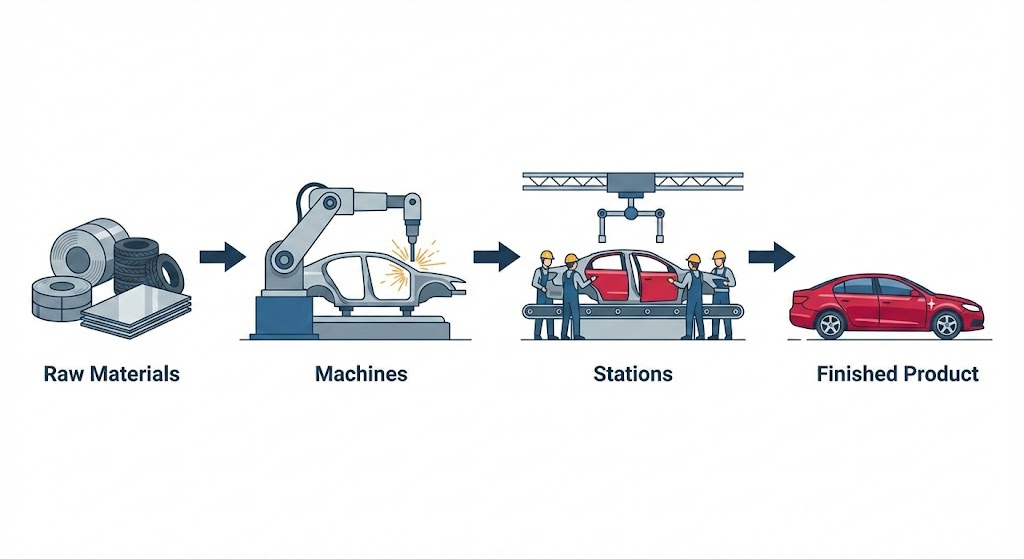
Manufacturing: Raw materials → Machines → Stations → Finished products
Your Agency: Time (raw material) → Process (machines) → Roles (stations) → Deliverables (services)
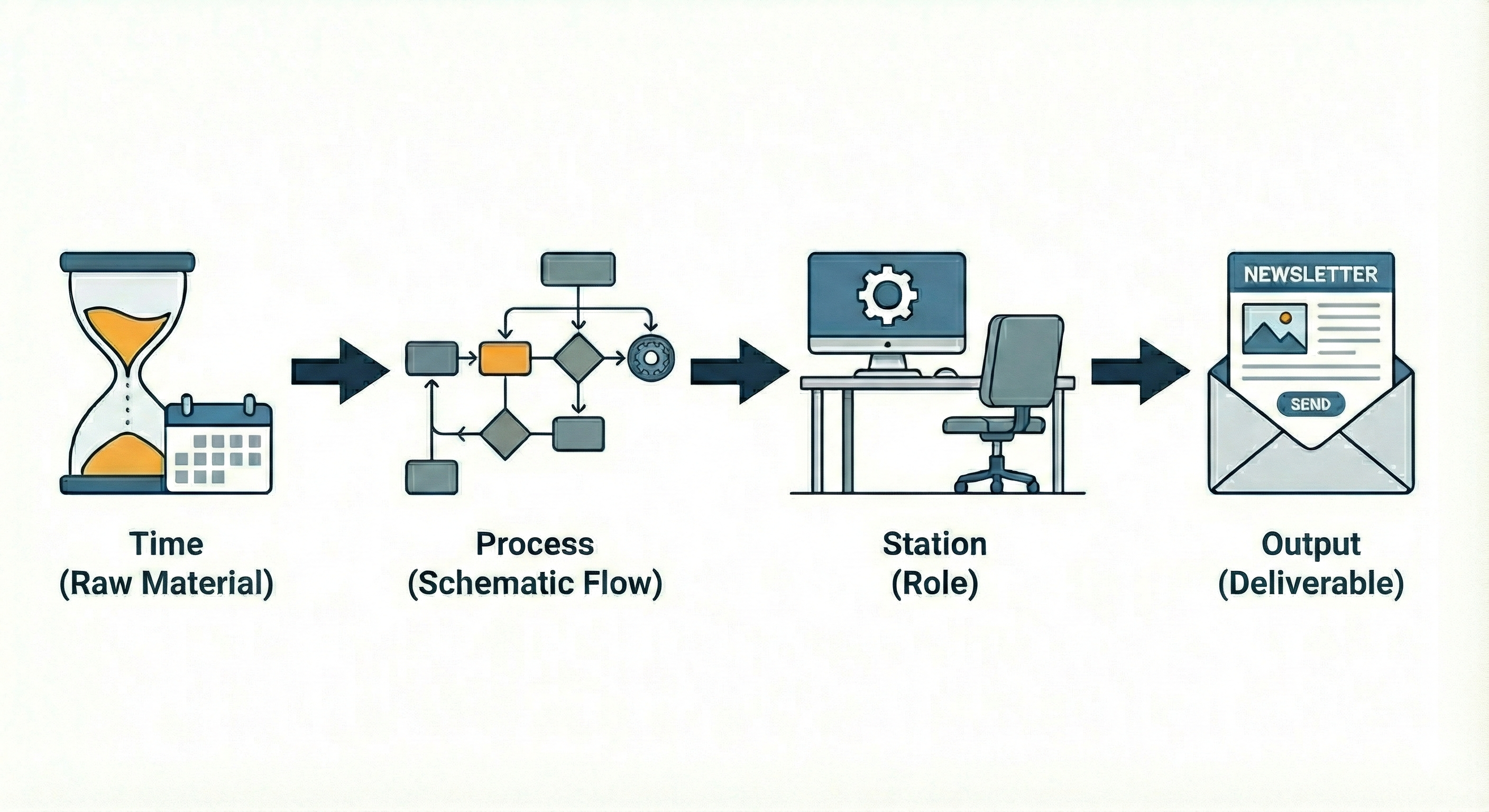
Most agencies think in tasks ("make 10 emails"). Factories think in throughput ("process 50 units through this station").
When you map the value chain - how work flows from copy to design to delivery - you see where the bottlenecks actually are.
Concept 2: Systematic Visibility Through Data, Not Through Meetings
Manufacturing enforces daily or even hourly visibility because inventory risk is so high. Remote work creates the same opportunity - your tools (Asana or ClickUp) throw off massive amounts of data. You can see within an hour if output drops.
Weekly production reviews provide the visibility you need. The data already exists in your systems. The meeting is about looking at planned vs actual together with your people and freelancers and diagnosing why there's a gap.
This creates visibility in hours, not months. Problems surface while you can still fix them, before they cause delays for your clients.
Concept 3: People Own Stations, Not Tasks
Manufacturing: Each worker understands their station's throughput and how it feeds the next step
Your Agency: Sales manufactures pipeline. Operations delivers what was sold. Each person sees where they fit.
This transforms people from task-takers waiting for assignments into business owners of their domains.
Proof One: The 5x Growth Curve
We applied these principles to Essence of Email. We didn't just improve workflows or give people better productivity tips. We installed a production floor.
At the start the agency was completing about 135 initiatives per month. A year later they were hitting 667 initiatives per month. We didn't quintuple the headcount. We quintupled the efficiency of the machine. We mapped every handoff and identified the specific units of production. We stopped reinventing the wheel for every campaign. This wasn't about working harder. It was about eliminating the invisible waste that exists in every remote agency. By the time we were done the founder could step back from the daily weeds because the system was doing the heavy lifting. The visibility was so clear that problems were diagnosed and fixed before they ever hit the client's desk.
Proof Two: The Sales and Marketing Paradox
Most founders believe they need superstars to grow. They think they are one resignation away from total collapse. This is a symptom of a weak system.
At one client we implemented our Sales and Marketing service and we used these same production floor principles to ramp up a new salesperson. She didn't have a magic rolodex or decades of experience. She had a machine. Within three months she was handling 70 percent of all sales for the entire company. She wasn't a hero. She was a disciplined operator following a proven system. This stabilized the profit and allowed the business to scale without the usual founder bottleneck that kills most growth phases. When the system is the hero the people become plug and play. You stop resenting the weight of payroll because you can finally see exactly how every hour of time is being converted into revenue.
[Visual Screengrab of Sales and Marketing client ramp up data]
How Most Remote Agencies Operate vs. How Production-Thinking Agencies Operate
The Old Way👎
The Production-Thinking Way👍
The Agency Production System
We aren't here to spend months interviewing your team to figure out what they do. We have over a decade of experience as both the client and the operator for some of the largest performance agencies in the world. We already know your initiatives. We already know your units of production. We know how the work should move because we have seen it fail and succeed at every scale.
What we do is implement our proven agency production system to protect your secret sauce. Every agency has a unique way of getting results but most of them have the same broken plumbing. We fix the plumbing so your talent can actually focus on the results. We don't ask what you do. We tell you how to systematize what you do so it can be measured and repeated without your constant intervention.
First we deploy our pre-built units of production and handoff protocols into your Asana or ClickUp. Second we install the reporting framework that makes the data inescapable. Third we move the operational responsibility down to your managers so you can finally stop being the Babysitter in Chief. You stop being the engine that drives the project and you become the architect who owns the machine. This usually takes about three months to fully stabilize and another three months to optimize for maximum throughput.
Here's How Production Thinking Gets Implemented in Your Agency
6-Month Implementation Timeline
From chaos to systematic production in 3 phases
Discovery & Setup Phase (Weeks 1-4)
Audit (first 2 weeks)
We start by understanding what you've already built. We want to make sure there isn't anything that is very specific to how you deliver your service or what you are offering your clients. We're also looking at your people and making sure there aren't any capability issues.
Asana Structure Implementation (first 2 weeks)
While performing the audit, we begin rebuilding your project structure to reflect actual production flow, but based on a production tested approach. Not just tasks and due dates - actual stations, throughput tracking, visibility into what's queued versus what's being processed.
Training & Initial Implementation (Weeks 5-10)
Training & Direction Documents (2-6 weeks)
Direction Documents teach each role how to think about their station. Manuals get into the specifics of how to do their job. Sales roles learn volume targeting and backwards math from outcomes. Operations roles learn throughput estimation and queue management. Managers learn how to run production reviews.
People need to understand where they fit in the factory before the system makes sense.
Full Implementation & Refinement (Months 3-6)
Core Implementation (3 months)
Weekly production reviews start. People analyze their own performance data before the meeting. The review is diagnosis, not reporting. Systems get refined based on what the data shows.
The entire operation moves over to production thinking, department by department.
Monitoring & Refinement (3 months)
We monitor the system running. Adjust what needs adjusting. Train managers to run it independently. By month 6, the system runs without the founder constantly watching it.
Total Timeline: 6 months
3 months core implementation, 3 months monitoring & optimization
The Decision
You have two choices. You can keep running on hero mode and hope that your team keeps catching the fires before they burn the building down. You can keep being CC'd on every email thread and losing sleep over unhappy clients.
Or you can install a machine. You can bring the same manufacturing discipline used by the world's most successful companies into your remote agency. You can get the visibility you need to scale without the noise scaling too. If you have an agency with 6 to 50 employees and you are tired of the chaos we should talk. We will do an Operations Assessment to see exactly where your profit is leaking and show you how to plug it. If we don't believe we can significantly improve your profitability we won't take the job.
Together, we:
- Create a map of your factory (where work actually flows and where it breaks)
- Install the production review structure (weekly visibility without micromanaging)
- Create Direction Documents tailored to your team (so they understand the system before it launches)
- Rebuild your Asana (or ClickUp) structure to show throughput, not just task lists
- Train your managers to run production reviews independently
- Monitor the system until it runs without constant oversight
6 months total: 3 months core implementation, 3 months monitoring.
I'm Heath Weaver
After 7 years at Sony as Senior Finance Manager for the VAIO business (€1B+ P&L), building the marginal profit analysis systems that gave leadership visibility into profitability by product, dealer, and country - work that contributed to turning the division from near-zero to 5.4% operating profit in three years (specifically cited in Sony's 2007 annual report) - plus financial analyst roles at Charlotte Russe and other manufacturing companies, I spent a decade understanding how well-run operations measure and manage complex value chains.
Then I ran a 50-person remote email agency for 5 years and applied production floor thinking to knowledge work.
The result: 5x output increase, 50% improvement in per-person client capacity, fewer clients but higher output per client.
Remote Executive implements production floor thinking in marketing agencies. It's me and my team working directly with you and your team - not consultants who hand you a playbook and disappear.
The approach is the same whether you need interim ops leadership while you search for the right full-time hire, or ongoing fractional support to build and maintain the system.
Map the factory. Install the structure. Train the team. Monitor until it runs without you.
Submit Your Implementation Request
We'll be in touch shortly to find a time with you. If you prefer you can use our scheduling page
Let's talk right now and discuss:
- Where your operation is actually breaking (based on what you share)
- Whether production thinking is the right fit for your agency
- Implementation timeline and engagement structure
Thanks for reading this far.
If you're running a remote agency where you can't see what's happening until problems surface, you're experiencing the invisibility crisis.
The fix isn't more status meetings or better software. It's production floor thinking: mapping the factory, measuring station throughput, reviewing the data weekly.
Manufacturing companies have enforced this discipline for decades because raw materials carry massive costs. Your raw material is employee time - and you're treating it like it's infinite.
Submit the form and let's map your factory.